Lisbon · Alfama
A Winter Morning in Alfama, Up to the Castle
From the Sé to the castle hill, Alfama’s steep lanes lead past viewpoints, fado’s home streets, and a flea market, with the Tagus below.
- Part of town
- Alfama and the castle hill
- Give it
- a morning
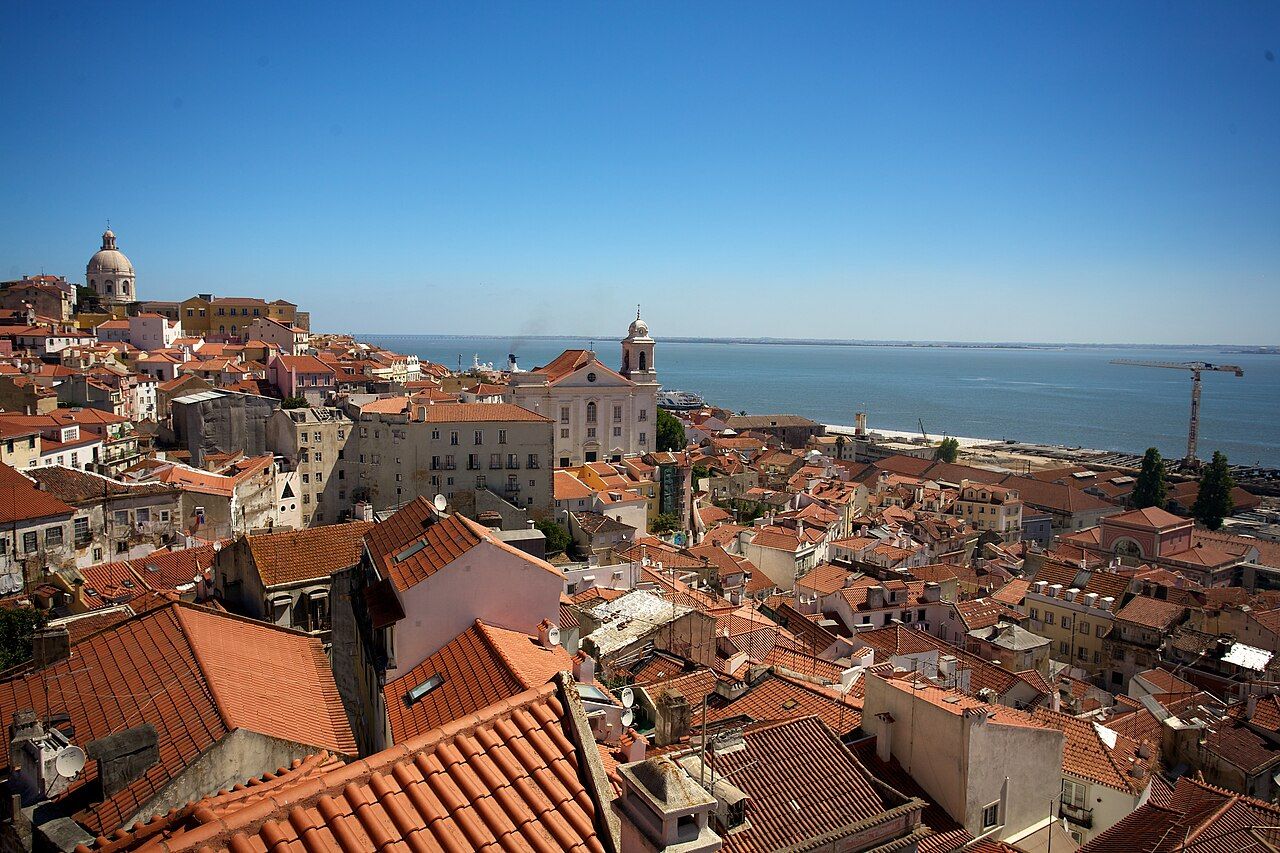
We pause beside the Sé, looking up at the streets that climb away from it. The lanes are steep, stepped and narrow, laid out long before cars. On a winter morning, the low sun falls across the white walls from the side, and the river appears between the roofs as the walk rises through Alfama.
- Start at Lisbon Cathedral, the Sé, and walk uphill through Alfama toward Castelo de São Jorge.
- Look out from the Miradouro de Santa Luzia and the Miradouro das Portas do Sol.
- The Feira da Ladra flea market is held at Campo de Santa Clara on Tuesdays and Saturdays.
1. From the Sé into Alfama
The Sé was begun in 1147, the year Lisbon was taken from the Moors. It gives the walk a clear starting point: from here, the route leaves the broad idea of the city behind and enters the close turns of the oldest district. Alfama largely survived the earthquake of 1755. Its lanes still make their own way uphill, sometimes by steps, sometimes along narrow passages between buildings.
There is no need to hurry through them. The slope asks for attention, and the turns keep changing what is in view. We look back toward the cathedral, then find ourselves looking up again. The low sun stays over the Tagus all day in winter, lighting the white walls from the side. The brightness reaches a facade, then slips out of view as the lane bends.
Alfama is Lisbon’s oldest district, and its shape feels bound to the hill. The streets were laid out long before cars, and walking makes that plain: the steps are part of the route, not an interruption to it. We follow the climb toward the castle, with roofs and small glimpses of water appearing between the close-set walls.
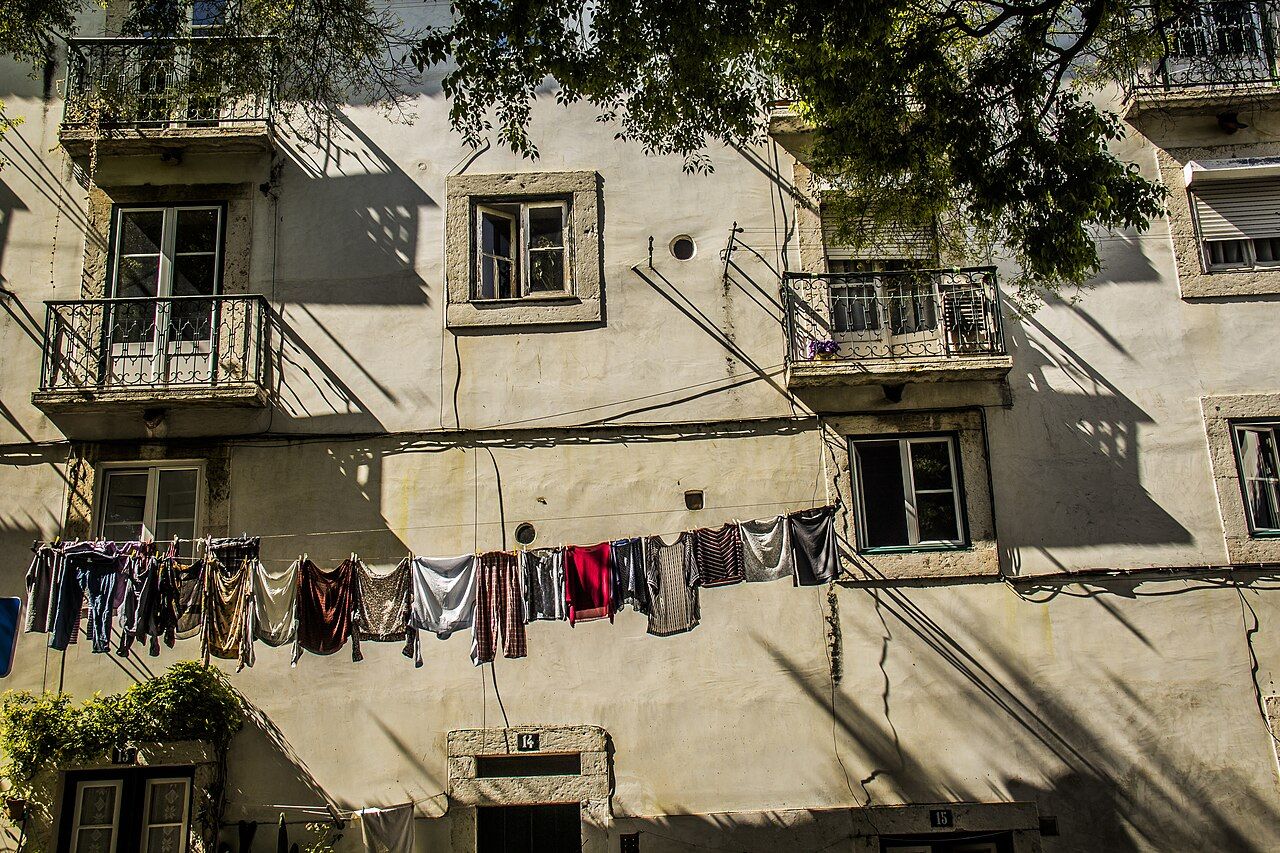

Fado grew up in the taverns of Alfama and Mouraria. That history belongs to these streets, even when the walk is quiet. Fado was added to UNESCO’s list of intangible cultural heritage in 2011. The connection is not confined to a single stop; it is part of the account of the neighborhoods themselves, and of the city’s music.
The walk also passes the viewpoints. At the Miradouro de Santa Luzia, a terrace is set with blue and white azulejo tile panels. The view and the tiles sit together in the same small stretch of the climb. We stop to take in the river and the roofs, then continue uphill.
From the Miradouro das Portas do Sol, Alfama’s roofs run down toward the river, with the dome of the National Pantheon in view. The panorama opens out from the close lanes. Across the Tagus, the horizon stays broad; nearer at hand, the rooflines gather around the hill.
The National Pantheon is the church of Santa Engrácia. It took from the 17th century until 1966 to finish. Lisbon people still call an endless job “obras de Santa Engrácia.” From the viewpoint, the dome makes that long span of construction part of the view, rather than a date set apart from the neighborhood.
2. Up to the castle
The castle occupies the highest hill above Alfama. The lanes keep climbing toward it, and the view changes as the ground rises. From the castle walls, the Baixa lies below and the Tagus spreads across the distance. The climb has taken us from the cathedral through the neighborhood and up to a wide look over the city.
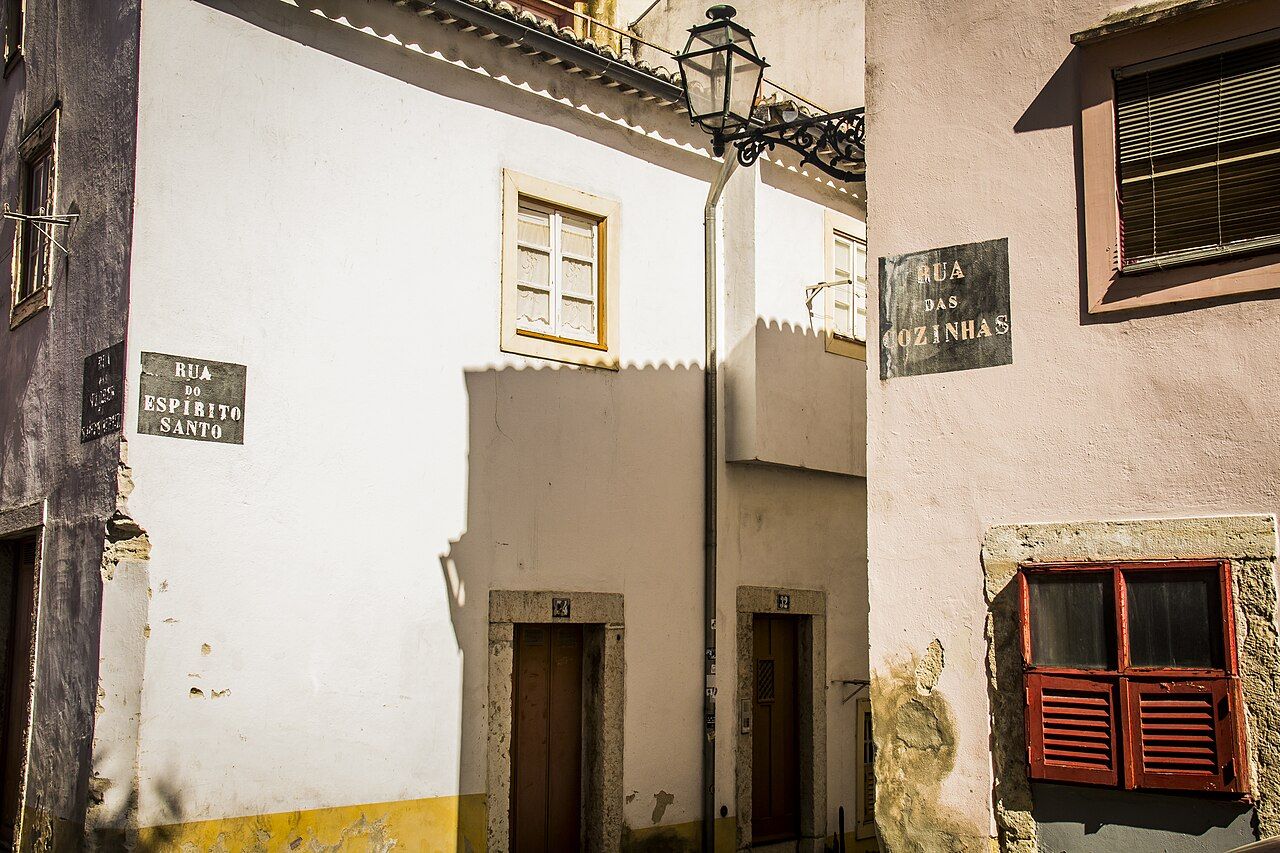

We leave the castle for the viewpoints and streets below. We find the contrast clear: the walls look out over the Baixa and across the Tagus, while Alfama’s narrow lanes gather beneath the hill. From here, the river light joins the roofs and white walls into one view.
The Feira da Ladra is held at Campo de Santa Clara on Tuesdays and Saturdays. It belongs to the same walk through the district, though the market itself is a detail to keep in mind when thinking about the route. The lanes, viewpoints and market ground give the hillside more than one pace: a steady climb, a pause to look, and room to wander among the streets.
From the castle hill, Lisbon continues beyond the view. We think of the yellow tram that grinds past and the riverside monuments further west as parts of the city beyond this morning’s walk, while this morning has stayed with Alfama and its rise toward the walls. The Tagus is still bright below us. We turn back toward the close lanes, carrying the river’s light into the shade between the buildings.
The low winter sun stays over the Tagus all day, lighting the white walls from the side.
The low winter sun stays over the Tagus all day, lighting the white walls from the side.
Next on our list: Sintra When the Clouds Come Down