Venice · Venice
Venice in the Winter Fog
Fog from the lagoon, high water in St Mark’s Square, and the wooden routes laid across it: winter in Venice is shaped by two kinds of water.
- Part of town
- San Marco and Dorsoduro
- Give it
- a day
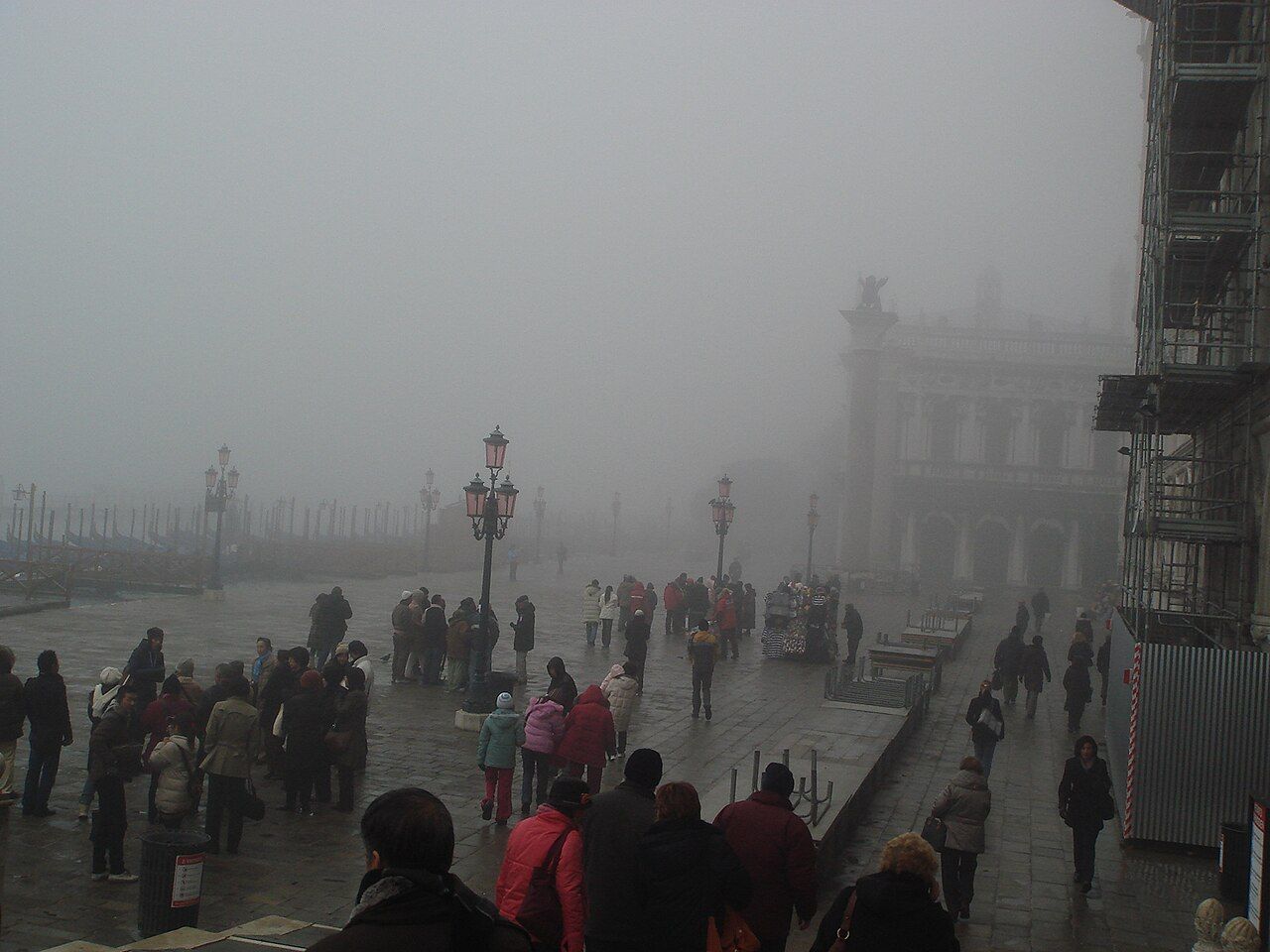
We keep returning to a small distinction: fog and high water belong to the same winter story, but they are not the same thing. One comes off the lagoon; the other rises into the city. In Venice, both shape how a day is understood.
- Area: San Marco and Dorsoduro
- Time: a day
Venice is built on 118 small islands in a lagoon, and more than 400 bridges cross its canals. Those figures give a sense of a city made of water crossings, but they do not explain the particular change winter brings. Fog has its own name in Venetian: caligo. High tides that flood the city have another: acqua alta.
The names matter because they describe different conditions. Caligo is winter fog off the lagoon. High water comes into the city at high tide. They can both be part of a winter visit, but one does not mean the other. We find it useful to keep that difference in mind as the details gather: the lagoon beyond the city, the square that floods first, the walkways set out along main routes.
Since 1987, Venice and its Lagoon has carried UNESCO World Heritage Site status. That designation belongs to the city and lagoon together, a useful reminder that the water is not just a backdrop to Venice. It is part of the setting the city is built within, and winter makes that relationship hard to set aside.
1. Fog, tide, and the square
High tides that flood the city come mostly between autumn and spring. St Mark’s Square is one of the lowest points in Venice, so it floods first. The fact is simple; its place in the winter picture is not. A visitor might arrive thinking of the square as a fixed center, then find that water is part of how it is encountered during a high tide.
When the water rises, raised wooden walkways called passerelle are set out along main routes. They make a route across the areas where the water is present. The detail is practical, but it also changes the way a familiar part of the city is read: not only as streets and squares, but as a place where routes can be raised above water.
In Venice, winter makes fog and high water separate parts of the same story.
In Venice, winter makes fog and high water separate parts of the same story.
The walkways do not alter the tide or explain the lagoon. They offer a way along main routes when the water rises. We like that the word passerelle gives the structure a name of its own; it is a useful thing to notice, rather than a detail to hurry past. The city’s winter character is not a single scene. It is made from conditions that ask for different kinds of attention.
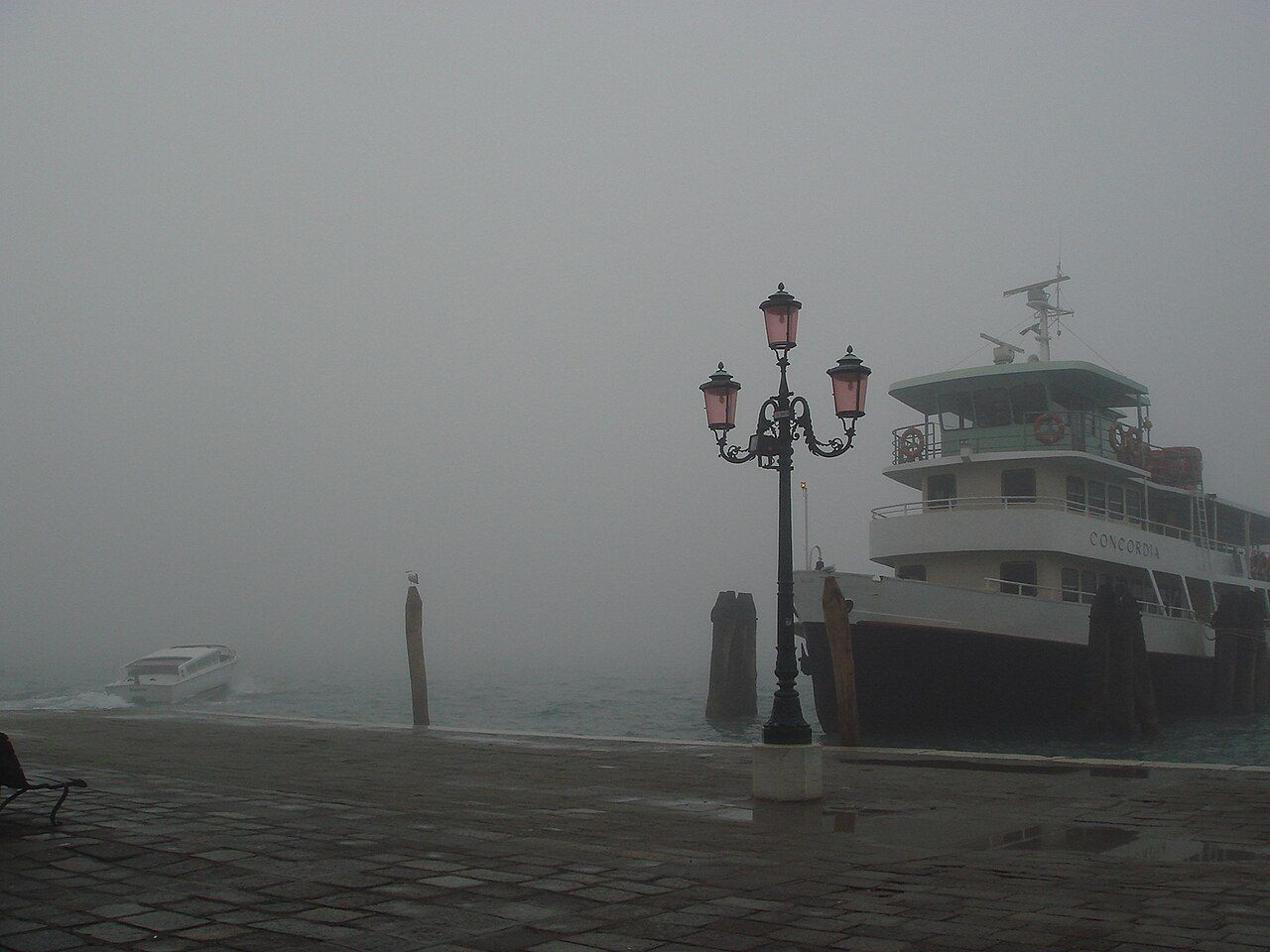

Fog belongs to the view off the lagoon, and caligo gives that fog a local name. High water has a more direct effect on the city’s routes, with St Mark’s Square at a low point and passerelle set out along main routes. It is possible to hold both facts in mind without making them one phenomenon. That distinction keeps the winter account clear.
The link between the lagoon and the city is also present in the scale of Venice itself: 118 small islands, more than 400 bridges, and canals crossed again and again. We can follow the slow boat down the Grand Canal in our imagined outline of a day, then return to the simple fact that water is part of the city’s structure. The route and the tide are not interchangeable, even when both bring attention back to the water.
There is room in that outline for small plates at the counter, too. The phrase sits alongside the larger winter details without replacing them. A day in Venice can include ordinary pauses, while the lagoon, the fog, and the routes across high water remain part of the same place.
For a different edge of the city, the Zattere is a long stone quay facing the island of Giudecca across a wide canal. That description gives us a place to set against the crowded idea of a square and its walkways: a length of stone, a wide stretch of water, and the island opposite. It is a clear winter detail without needing to turn into a separate itinerary.
The lagoon inlets bring another part of the story into view. The MOSE flood barrier there was first raised against a high tide in October 2020. It belongs to the way Venice meets high water now, alongside the passerelle used along main routes. The barrier and the walkways operate at different scales: one is at the lagoon inlets; the others are laid out across routes in the city.
That history sits beside the seasonal rhythm. High tides that flood the city come mostly between autumn and spring, while Carnival is held in the weeks before Lent, usually in February. Winter in Venice is not only fog or water. Carnival belongs to that same stretch of the year, falling within the months that give this story its limits.
We end at the Zattere, with the long stone quay facing Giudecca across the wide canal. The city’s winter account can be held there for a moment: lagoon, water, and stone, each with its own place.
Next on our list: Glass, Lace and Torcello by Public Boat