Vienna · Belvedere
A Half Day at the Belvedere and Gustav Klimt’s The Kiss
A morning among two palaces and the formal garden between them, followed by Gustav Klimt’s The Kiss and a view of the city from the upper terrace.
- Part of town
- Landstrasse
- Give it
- half a day
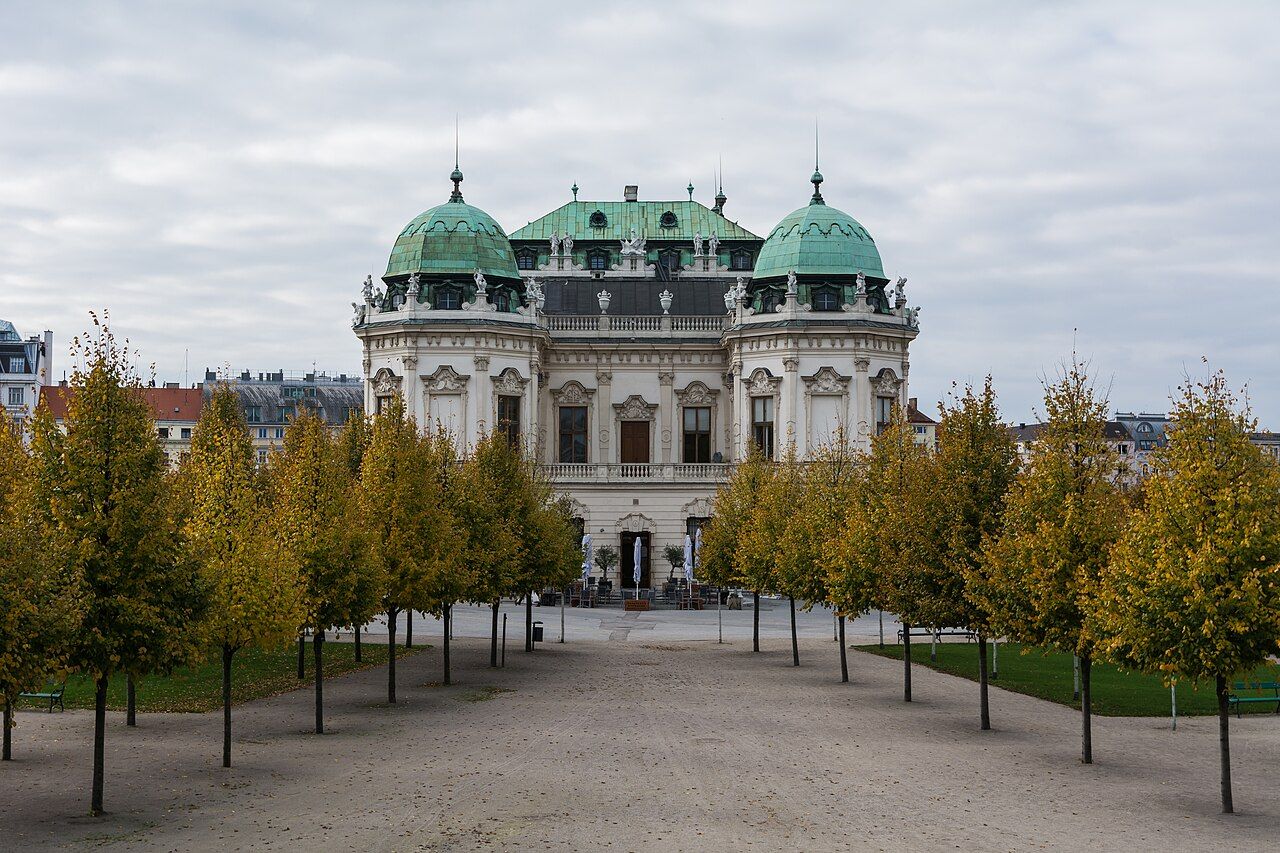
The Belvedere was built for Prince Eugene of Savoy, with Johann Lukas von Hildebrandt as its architect. The two palaces and the garden between them give a half day a clear shape: begin at the gate, move between the buildings, then finish above the city. The route joins architecture, garden, and art without needing to leave the grounds.
- District: Landstrasse
- Time: half a day
- Tram D stops at the Schloss Belvedere gate.
1. Morning
Start at the gate, where Tram D stops. The Belvedere is not a single palace but two, built several years apart. The Lower Belvedere was built from 1714 to 1716; the upper palace followed from 1717 to 1723. Both were designed by Johann Lukas von Hildebrandt for Prince Eugene of Savoy.
Between the buildings, a formal French garden slopes from one palace toward the other. It gives the visit a natural middle: the architecture on either side, the garden running down between them. We follow that line rather than treating the palaces as separate stops. The slope keeps the two buildings in view as parts of the same place, and makes the garden a route as well as a space between them.
The city has other routes shaped by its earlier edges, including the boulevard where the walls stood. Here, the garden itself sets the pace and direction, joining the two palaces without making them look alike. Its position between the buildings makes the garden the link between them.
2. Midday
Give the middle of the visit to the Upper Belvedere. It holds Gustav Klimt’s The Kiss, painted in 1908 and 1909, and has the largest collection of Gustav Klimt’s paintings in the world. That is a lot of context around one familiar work, but the painting remains the clear point of focus.
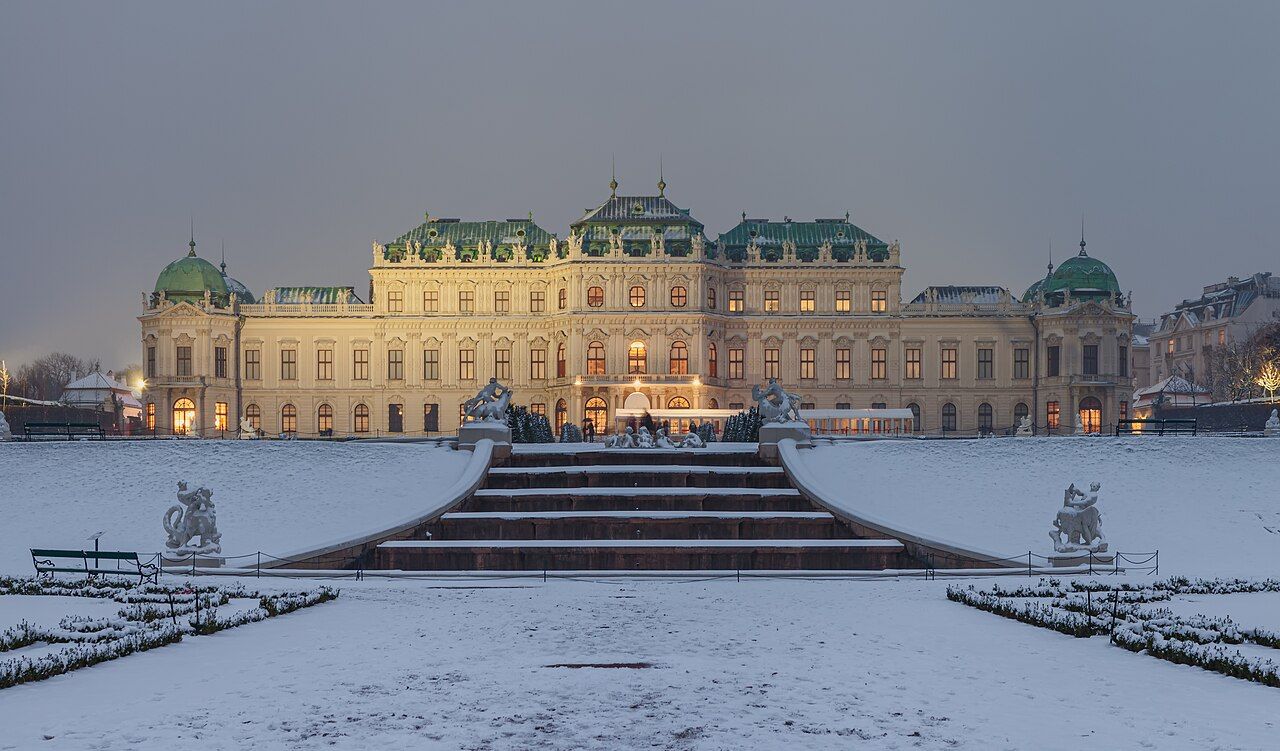

Works by Egon Schiele hang there too. Jacques-Louis David’s Napoleon Crossing the Alps is also in the collection. These works place very different artists and subjects within the same visit; there is no need to turn the collection into a checklist. The useful plan is simply to leave space for looking, then continue through the works at a measured pace.
The garden remains part of the route, not a gap between the art and the city. Looking back across it gives the two palaces another relationship: one above the other on the slope, with the formal French garden connecting them. From here, the route can be read in reverse, from the upper building down through the garden to the lower one.
Next on our list: An Afternoon in a Viennese Coffee House
3. Late afternoon
Finish on the upper terrace. From there, the spire of St Stephen’s Cathedral is visible over the city. It is a view that brings the visit outside the palace again, with the garden below and the city beyond it.
We can look from the terrace toward the spire, then back down the slope to the garden and the lower building. The Belvedere’s parts fit together in that last view: the two palaces, the formal garden between them, and the city at the far edge. The spire stays in view as we turn back toward the garden, with the two palaces on either side of its slope.