Vienna · Ringstrasse
Round the Ringstrasse by Tram
An hour or two along most of Vienna’s Ringstrasse brings the opera, parliament, City Hall and the Kunsthistorisches Museum into view.
- Part of town
- Innere Stadt
- Give it
- an hour or two
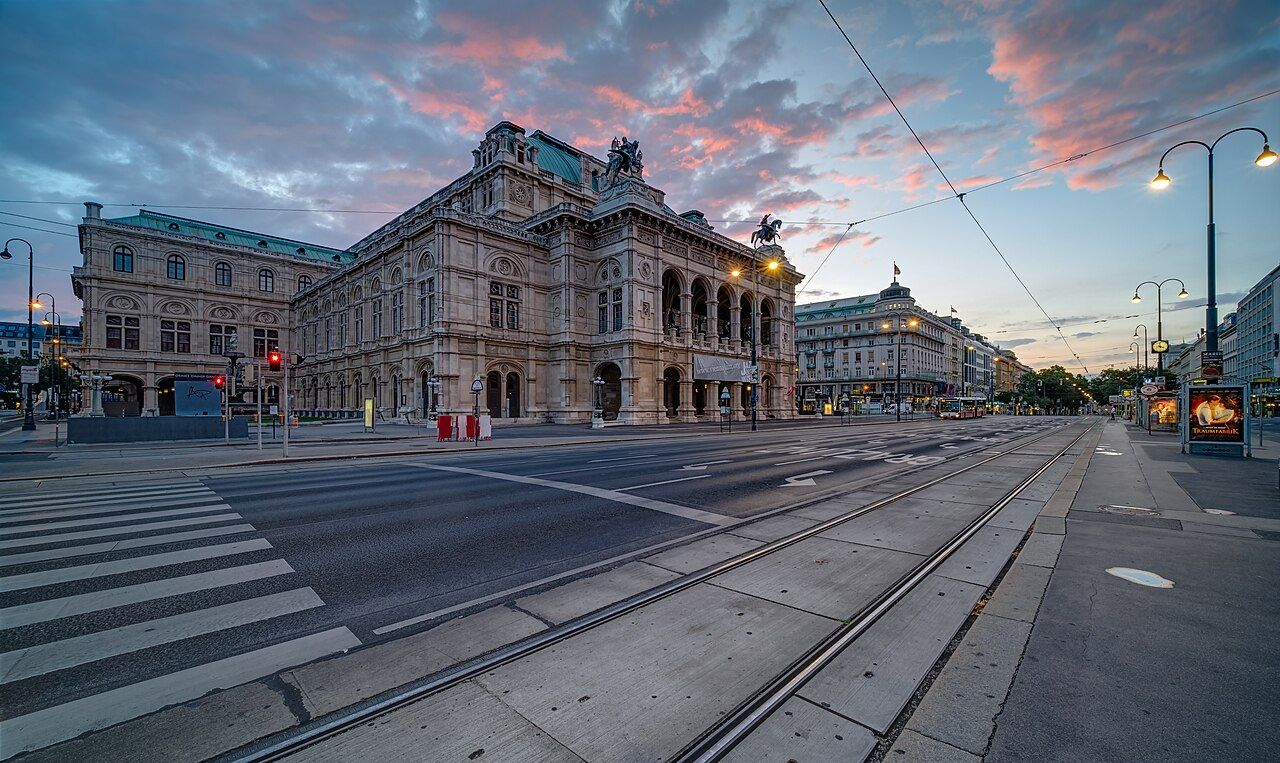
The Ringstrasse follows the line of Vienna’s former city walls. Emperor Franz Joseph ordered the walls pulled down in 1857, and the boulevard was built where they had stood. Trams 1 and 2 now run along most of its 5.3 km length, passing a sequence of public buildings that gives the ride its shape.
- Area: Innere Stadt.
- Set aside an hour or two.
- Trams 1 and 2 run along most of the Ring.
1. Morning: the opera and parliament
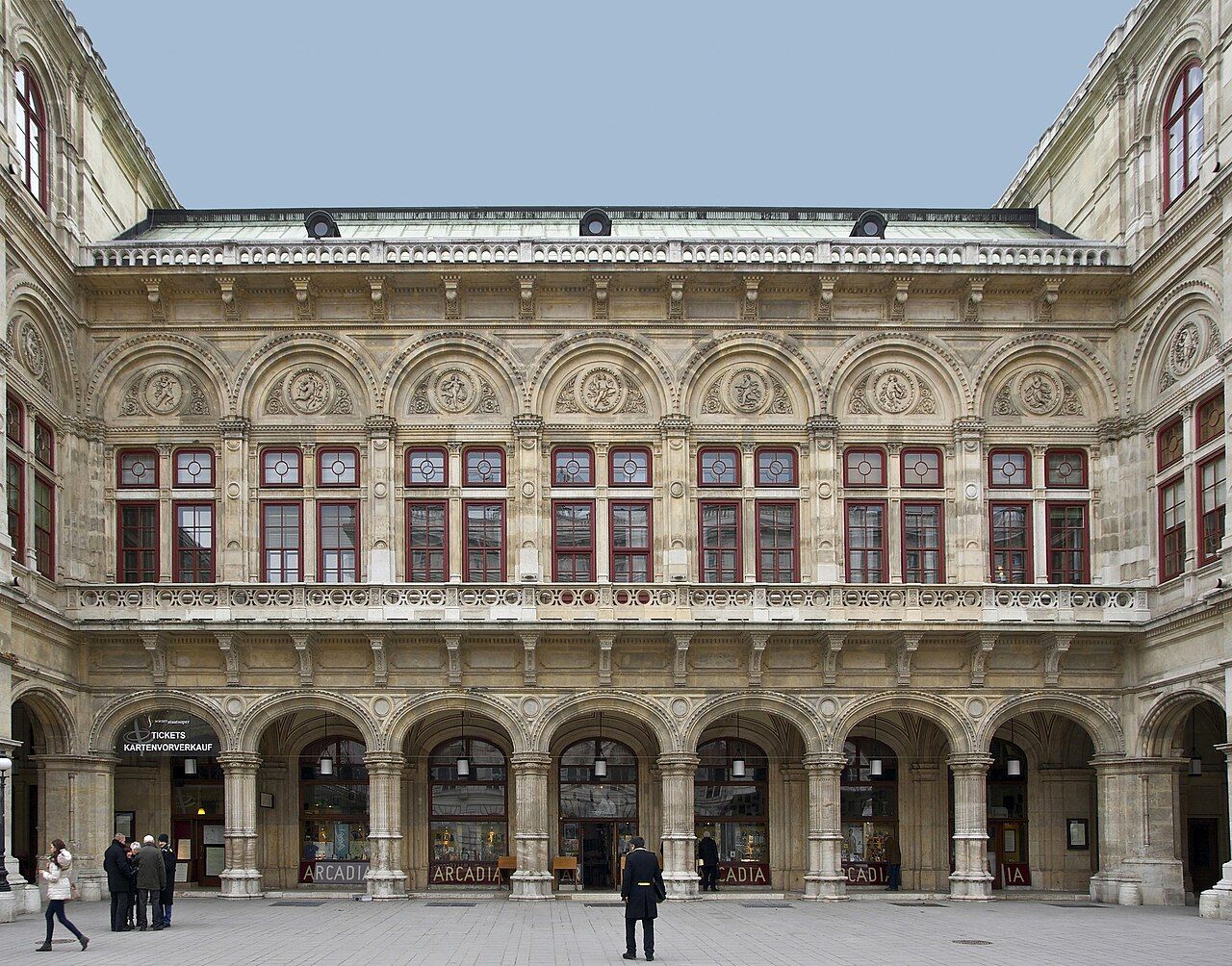
Start with the State Opera, on the Ring. It opened in 1869. From there, the tram ride is a way to follow the boulevard’s landmarks without treating each building as a separate destination. The route covers most, rather than all, of the Ring, so the aim is a ride along the grand boulevard, not a claim that the tram completes a full circuit.
Continue to the parliament building. Its Greek-style front and the statue of Pallas Athena give it a distinct place in the sequence. The boulevard links buildings with very different forms; here, the classical front is the feature to look for. We keep the pace simple: ride, take in the facade, then let the next stretch of the Ring lead on.
The Historic Centre of Vienna was listed by UNESCO in 2001. That larger context sits behind this short itinerary: the Ringstrasse marks the former line of the walls, while the buildings along it make the route legible as a walk through the city’s civic and cultural landmarks.
Next on our list: An Afternoon in a Viennese Coffee House

2. Midday: the City Hall
The neo-Gothic City Hall, known as the Rathaus, faces the Burgtheater across a park. The relationship between the two buildings is part of the view here: the Rathaus on one side, the Burgtheater opposite, and the park between them. The tram keeps the boulevard in the foreground, but this is a good point to pause the ride and look across.
From mid-November, a large Christmas market fills the Rathausplatz. The square and the market give this part of the route a different emphasis at that time of year. Outside that period, the City Hall and its position across from the Burgtheater remain the landmarks in this stretch.
For another view of Vienna’s art, see Klimt's gold. On this route, the focus stays with the buildings along the Ring and the way the tram joins them into one outing.
3. Late afternoon: the museums
Continue along the Ring to the Museum of Fine Arts, the Kunsthistorisches Museum. It opened in 1891. After the opera, the parliament and the Rathaus, it brings the itinerary to a museum rather than another civic building. The sequence is easy to hold in mind: theater, parliament, city hall, then the museum.
Trams 1 and 2 follow most of the boulevard, so the ride can remain the main thread from morning into late afternoon. An hour or two is enough to make this a compact itinerary: the former city walls, the State Opera, Pallas Athena at the parliament, the Rathaus facing the Burgtheater across a park, and the Kunsthistorisches Museum. The Ringstrasse’s length is about 5.3 km; its landmarks are the stops in the story, whether the ride is taken all at once or in pieces.